
History, Violence, and Hope
Notes from the Literature Classroom Today

We were talking about epistemic violence. Bit of a mouthful, I know.
“Knowledge violence” is the way one student translated it in our seminar discussion: knowledge that is itself a form of violence.
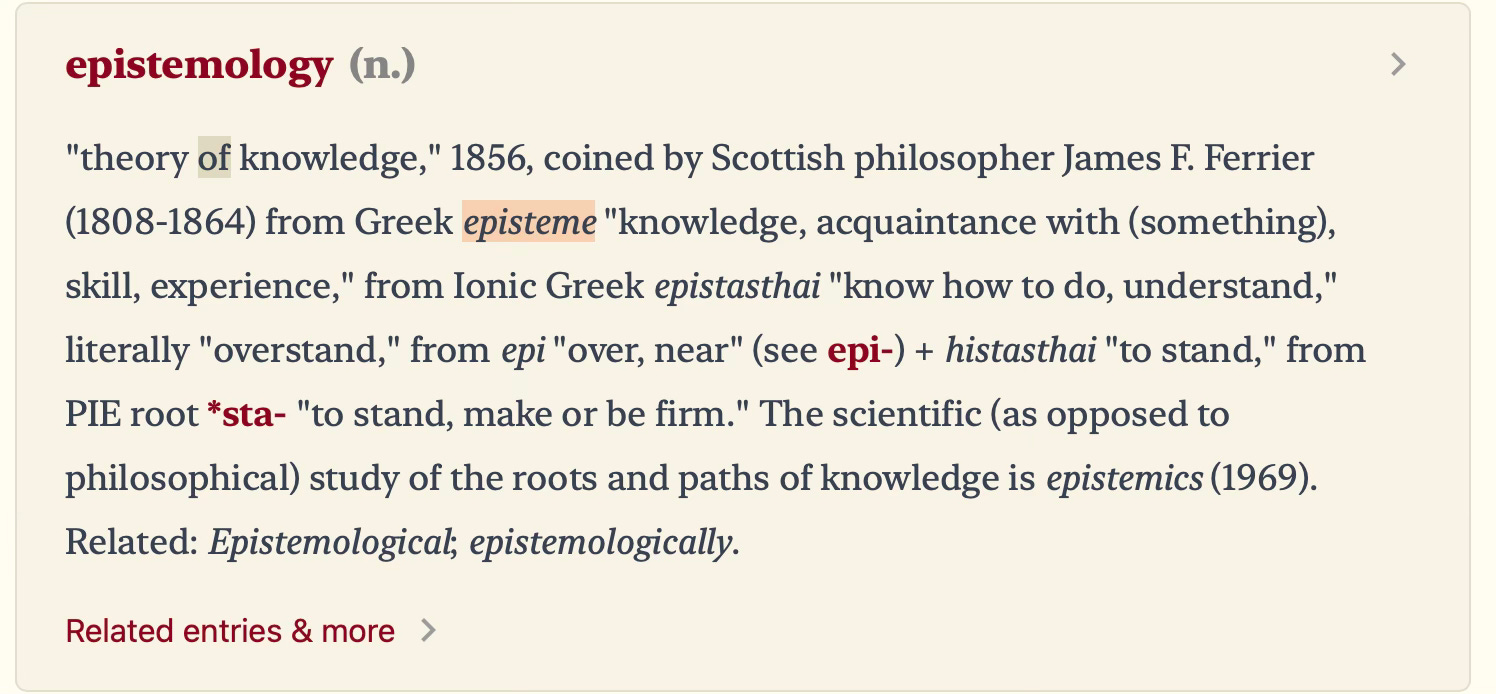
“Episteme” from the Greek for knowledge, to stand (sta-) upon (epi-). Knowledge that stands upon what it suppresses, that erases, that enacts violence.
And then suddenly the discussion leapfrogged from the abstract to the visceral and we were deep in the deepest muck of being alive today. Because a student cut to the chase and asked: what is the point of this knowledge-making then? Is being hopeful about the possibility of change just a useless delusion?
Is being hopeful about the possibility of change just a useless delusion?
I let the question hang in the seminar room while I silently debated with myself: do we go down this road instead of talking about the 18th-century literary works that are on the syllabus for today’s class? Or do we do this other thing about the meaning of life?
I went with opening the space to the student’s question. Because opening the space to questioning is the important part of teaching. It was not a comforting ride.
Let me explain.
This semester I’ve been teaching Saidiya Hartman’s brilliant article, “Venus in Two Acts,” an essay that circles and scours and mines the rocky terrain of how historians and writers engage with the archives of slavery, given that these archives are litanies of cruelty and violence and the only histories we have of many of our ancestors.[1]
We are talking about the logbooks of slaving voyages, the sales records of plantations, the trial transcripts of white men accused—and absolved—of the mass murder of African captives to collect insurance gains. These are documents that are easy to find but hard to fathom; hard to make sense of in any emotional or cognitive way even when you are staring at the strokes of the 18th-century ink on the paper that is helpfully digitized and catalogued in the Beinecke Library at Yale, the Senate House Library in London, the George Washington Papers at the University of Virginia and Mount Vernon.
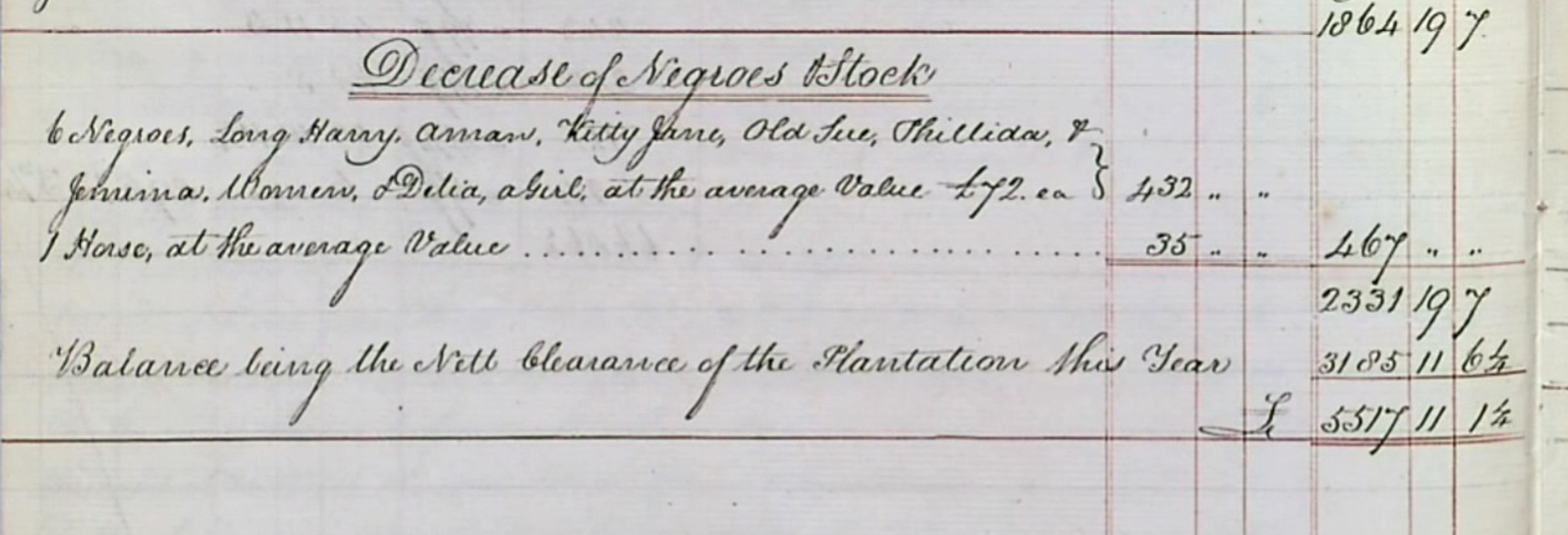
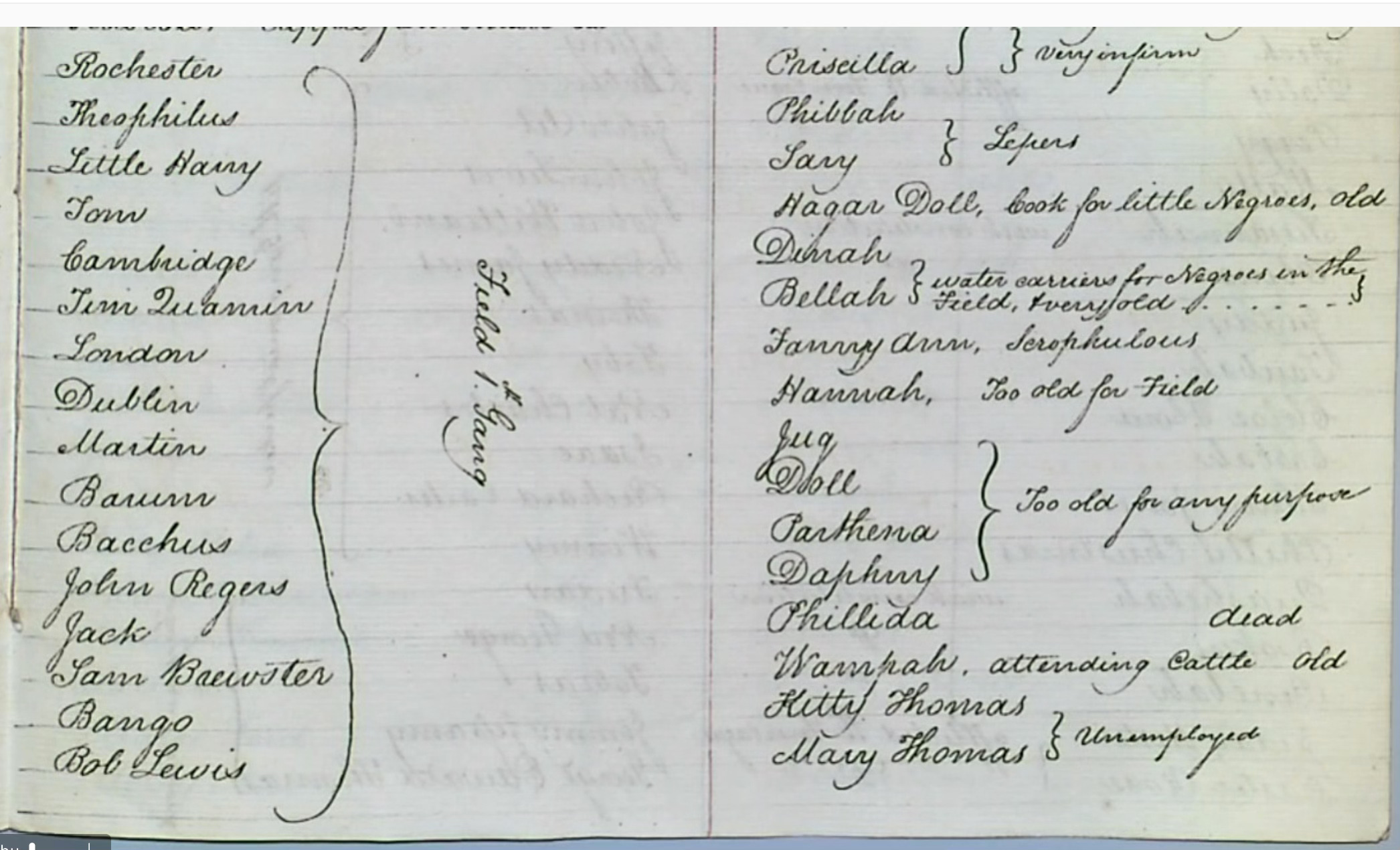
The epistemic violence is a second layer of violence that resides in the archive. The second act of violence, Hartman tells us, reduces the captive African to a commodity or a corpse in the records of the archive. This violence—this record keeping—has erased the human lives of captive African men, women, and children and licensed violence against them in the past and the present.
In the seminar room this week, as we worked to wrap our minds around these concepts, one student pointedly posed the question: if we have known all of this for so long, and exposed this violence for so long, and the violence just continues to be repeated if not escalated in the world around us today, why on earth should we imagine that anything can change?
Is being hopeful about the possibility of change just a useless delusion?
Sometimes things get real very fast in the classroom.
I teach literature. I believe in hope, in knowledge-making, in language, in imagination, in possibility.
But I also felt deeply the question this student was posing and had no desire to cover over the depth of the chasm it opened. To paper it over. To turn the page.
So I let the stand before us, giving the students space to engage, and they did. Tentatively, passionately, cynically—with a whole range of thoughts and emotions—some making the case that hope is all we have, others unpersuaded, others tracking back and forth between the two.
Part of me thinking—we have a lot of reading to talk about during this class and if this discussion happens we will not be covering this reading as I had planned, but part of me also thinking, this is the very real question we must face and we all need space to say these things, to think these things, and what is professional training if not this?
I am also aware that what hope and possibility look like are very different depending on where you sit. Access to hope is not equally distributed. For my graduate students, entering the academy on the occasion of its spectacular collapse is very different than occupying the position of a tenured senior faculty with a TIAA retirement account whose balance is a non-trivial ballast for me in times of anxiety. Not to mention that I am white, well-housed, and have many documents attesting to my US citizenship.
All the more reason, though, not to paper over the question, not to whistle past the graveyard of our present.
This week I read about ICE agents entering a house in Chicago and taking naked children in the middle of the night, ziplocking their wrists, and placing them in U-Haul vans. So yes, in the face of this news and the unending onslaught of—no, make that the increasing onslaught of—such violence, hope for the power of the imagination, for decolonizing the archive, for shifting epistemic knowledge systems seems slim, perhaps laughable.
I was not sure what to tell my students. I did not want to offer thin mantras of positivity but still I know that there is always possibility, always change, and that this is the fulcrum of resistance.
I took a breath and told my students this: for me, hope is a wave.
Hope ebbs and flows; it is not binary—not just on or off, not a matter or either drinking the sweet Kool-Aid or of coldly foreswearing its false promises. Rather, I feel its pull as it rises and sometimes I ride it gloriously, other times I am pummeled and bruised by the same force. I told them that hope is an elemental force; not on or off but rising and falling across time.
And I also said to them—because on occasion, even though I usually feel like I know nothing, I do place myself in the position of an elder, and this was one of them—know that your work matters.
It may feel like your work does not matter, that the knowledge-makers doing their knowledge-making will never be budged, will never change and what is the point. But that is not true because things do change. Your work matters, your writing matters, your thoughts matter, your voice matters. I promise you. Your voices will be those that shape the future because there is no future but in you.
Then we did turn the page: we turned to an analysis of Mary Rowlandson’s captivity narrative, the story of a Puritan woman held captive for eleven weeks by Nipmuc tribe members in western Massachusetts during King Philip’s War in 1676.[2] That and a brilliant recent analysis of the war and its cultural history by Lisa Brooks, an Abenaki scholar who invites us to question how we think about our relation to one another (in terms of kinship vs. hierarchy), how we think about land ownership (collective use vs. privatization), and the ways that the ideas we rely on now to organize our world (our epistemologies) were once quite different, prior to settler colonialism, and by extension, might be different in the future.[3]
[1] Saidiya Hartman, “Venus in Two Acts.” Small Axe, vol. 12 no. 2, 2008, p. 1-14. https://muse.jhu.edu/article/241115. Also brilliant on the violence of the archive: Marisa Fuentes, Dispossessed Lives: Enslaved Women, Violence, and the Archive. University of Pennsylvania Press, 2016.
[2] Mary White Rowlandson, The Sovereignty and Goodness of God: Together with the Faithfulness of His Promises Displayed: Being a Narrative of the Captivity and Restoration of Mrs. Mary Rowlandson and Related Documents. Ed. Neal Salisbury. Bedford Books, 1997.
[3] Lisa Brooks, Our Beloved Kin: A New History of King Philip’s War. Yale University Press, January 2018.
I want to take your class!